
 (888) 384-1210
TRU STAR SENIOR CARE
Overnight Care

Dependable Support Throughout the Night
Tru Star Senior Care provides private-pay overnight support for seniors who need assistance, reassurance, or
supervision while their families rest.
8:00 p.m. to 8:00 a.m. • Minimum three nights per week • Minimum two-week commitment
Keeping Seniors Connected, Independent & Supported
Two Overnight Care Options
Sleeping Overnight Care
May be appropriate when the client generally sleeps through the night and only requires occasional
assistance. The caregiver may sleep but remains available when the client wakes and needs help.
• Occasional assistance expected
• Safe sleeping area required
• Caregiver available when needed
Awake Overnight Care
The caregiver remains awake and actively working throughout the entire 8:00 p.m. to 8:00 a.m. shift.
• Frequent bathroom escorts
• Nighttime confusion or wandering
• Repeated reassurance or redirection
• Continuous safety observation
If a client requires frequent assistance throughout the night, the service must be scheduled as Awake Overnight Care.
What Overnight Care May Include
• Evening companionship
• Help settling into the nighttime routine
• Bathroom escort and assistance
• Regular bathroom reminders
• Walking and mobility support
• Help getting safely in and out of bed
• Medication reminders
• Hydration reminders
• Light meal or snack for the client
• Safety observation
• Calm redirection
• Bed-linen changes when necessary
• Family and office communication
• Morning assistance before 8:00 a.m.

Respectful Bathroom Support
The caregiver can walk beside the client, provide steadying support, open the bathroom door, and remain available according to the approved care plan. Assistance is provided respectfully while protecting the client's privacy and dignity.
Bathroom escort and assistance - never rushed, never clinical, always respectful.
Overnight Support for Clients Living With Dementia
Overnight Care may be especially helpful for clients living with dementia who experience changes in sleep patterns, confusion, anxiety, wandering, or restlessness during the night.
• A calm and reassuring presence
• Gentle redirection
• Bathroom escorts and reminders
• Walking and fall-prevention support
• A familiar nighttime routine
• Safety observation
• Hydration and medication reminders
• Communication about changes in sleep or behavior
Clients who wander, wake frequently, or need continuous observation should receive Awake Overnight Care.
How Overnight Care Works
1. Consultation and Schedule Review
Tru Star learns about the client's nighttime routine, sleeping habits, bathroom needs, mobility, dementia-related concerns, and family preferences.
2. Select the Overnight Option
We determine whether Sleeping Overnight Care or Awake Overnight Care is appropriate.
3. Personalized Care Plan
The plan explains the evening
routine, bathroom reminders,
mobility assistance, safety needs, medication reminders, and morning routine.
4. Caregiver Arrives at 8:00 p.m.
The caregiver receives important updates and helps the client prepare for a safe and comfortable night.
5. Morning Update at 8:00 a.m.
Before leaving, the caregiver reports significant concerns or changes according to the approved communication plan.
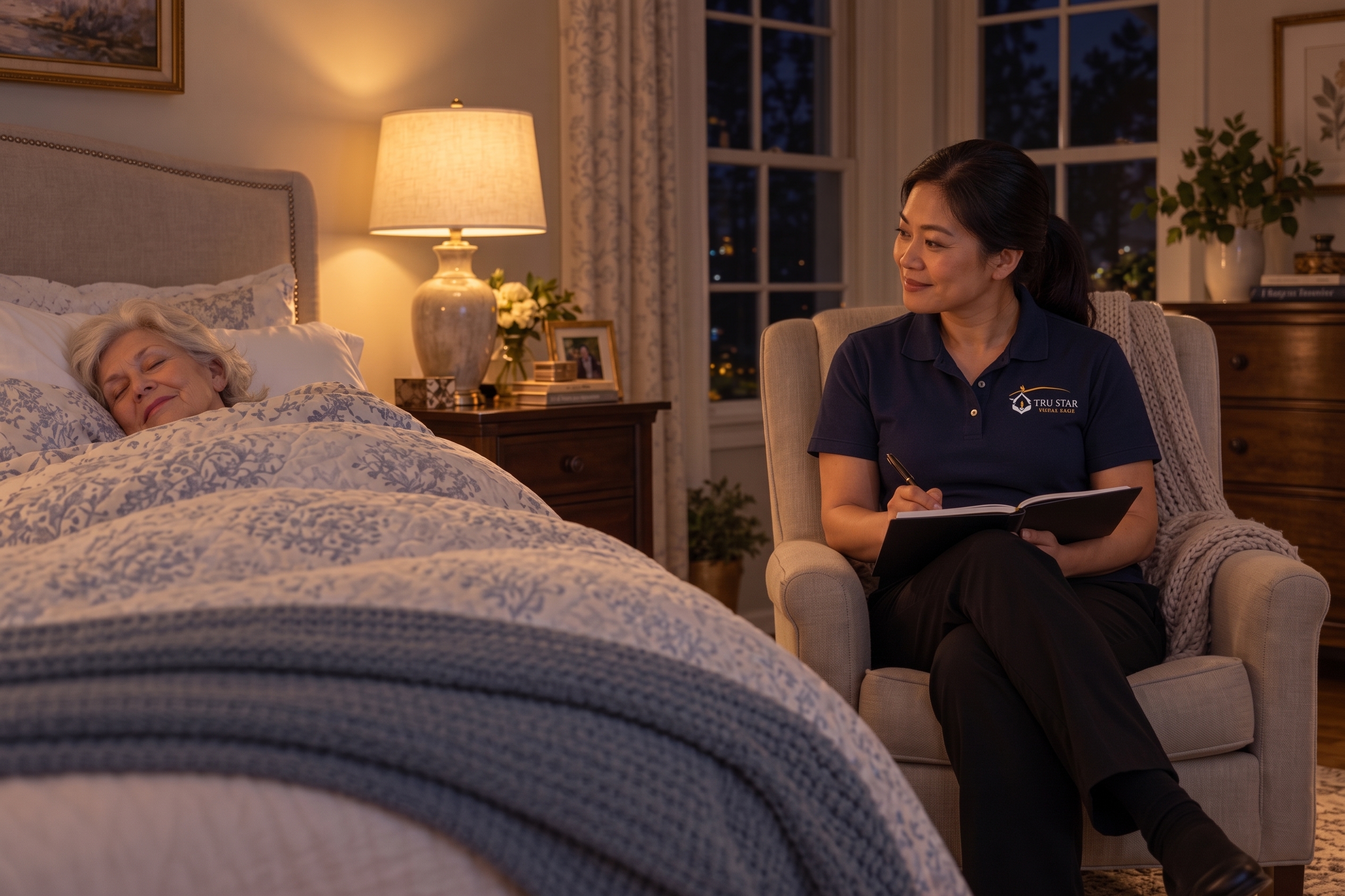
A Reassuring Presence While the Client Sleeps
The caregiver remains nearby and available according to the selected overnight service. This picture shows an awake caregiver seated in a recliner while the client sleeps peacefully in familiar surroundings.
For Sleeping Overnight Care, the caregiver may sleep in the approved sleeping area and respond when occasional help is needed. For Awake Overnight Care, the caregiver remains awake and actively working throughout the shift.
Meals and Household Support
During the overnight shift, the caregiver may prepare a light meal or snack for the client, provide hydration reminders, clean the client's eating area, change the client's bed linens when necessary, and keep the client's immediate living area safe and organized.
The caregiver's duties are for the client named in the service agreement. They do not automatically include cooking, cleaning, laundry, or assistance for a spouse, relative, guest, or another household member. If someone else needs assistance, the family must contact Tru Star so the additional needs can be reviewed and properly
added.
Service Requirements
• Service hours are 8:00 p.m. to 8:00 a.m.
• Each visit is a 12-hour overnight shift
• Minimum three nights per week
• Selected nights do not have to be consecutive
• Minimum two-week service commitment
• Sleeping Overnight Care requires a safe sleeping area
• Awake Overnight caregivers remain awake throughout the shift
• All duties must follow the approved care plan
• Schedule and service changes go through the Tru Star office
If the client begins waking frequently or needs repeated assistance, Tru Star may recommend Awake Overnight Care.
Why Families Choose Tru Star Overnight Care
• Dependable 12-hour nighttime support
• Sleeping and Awake Overnight options
• Carefully matched caregivers
• Dementia-focused support
• Bathroom escorts and mobility assistance
• Familiar nighttime routines
• Clear morning updates
• Personalized care plans
• Ongoing office oversight
• Reassurance for families who need to rest
• Private-pay, non-medical support
• Service throughout Long Island
Ready to Plan Overnight Support?
8:00 p.m. to 8:00 a.m. • Minimum three nights per week • Minimum two-week commitment
FAQs